One More Light: Rethinking Suicide Awareness
A note before reading: This article discusses suicide and suicidal thoughts. If you or someone you know needs immediate emotional support, call or text 988 or visit 988lifeline.org. If there is immediate danger, call 911. Help Send Therapy does not provide crisis services.
TW: Discussion on Suicidal ideation and Suicide
Rest In Peace Chester Bennington (the late lead singer of Linkin Park).
October 2017.
Nearly 10 years ago now, I was standing in the crowd at the Hollywood Bowl, surrounded by thousands of strangers all singing Chester’s words back to the stage. It was the Linkin Park and Friends concert, held just months after Chester’s death by suicide. The energy in that arena was electric, and underneath it was an overwhelming, crushing weight of shared grief.
I kept looking around at the sea of faces and thought about how pain is so often hidden in plain sight. Knowing what I know now about suicidal ideation and suicide, is that sometimes, it may not be obvious, there may not always be glaring signs that provoke us to jump into action.
Chester didn't fit the neat, clinical stereotype of someone in crisis. On the outside, he was smiling, laughing, creating, and deeply loved. Yet his death (and the final album Linkin Park gave us, One More Light, 2017) truly shook me. It created space for a conversation about what suicidal ideation actually looks like, and honestly, it’s reminded me of why I felt called to become a therapist in the first place.
When I first listened to the album One More Light, it read less like an album and more like a letter connecting our collective suffering.
Track by track, Linkin Park has put into words what folks living with suicidal ideation often experience, in such tenderness, sincerity, and strength. Let’s take a deeper look into several One More Light Album Tracks:
Invisible
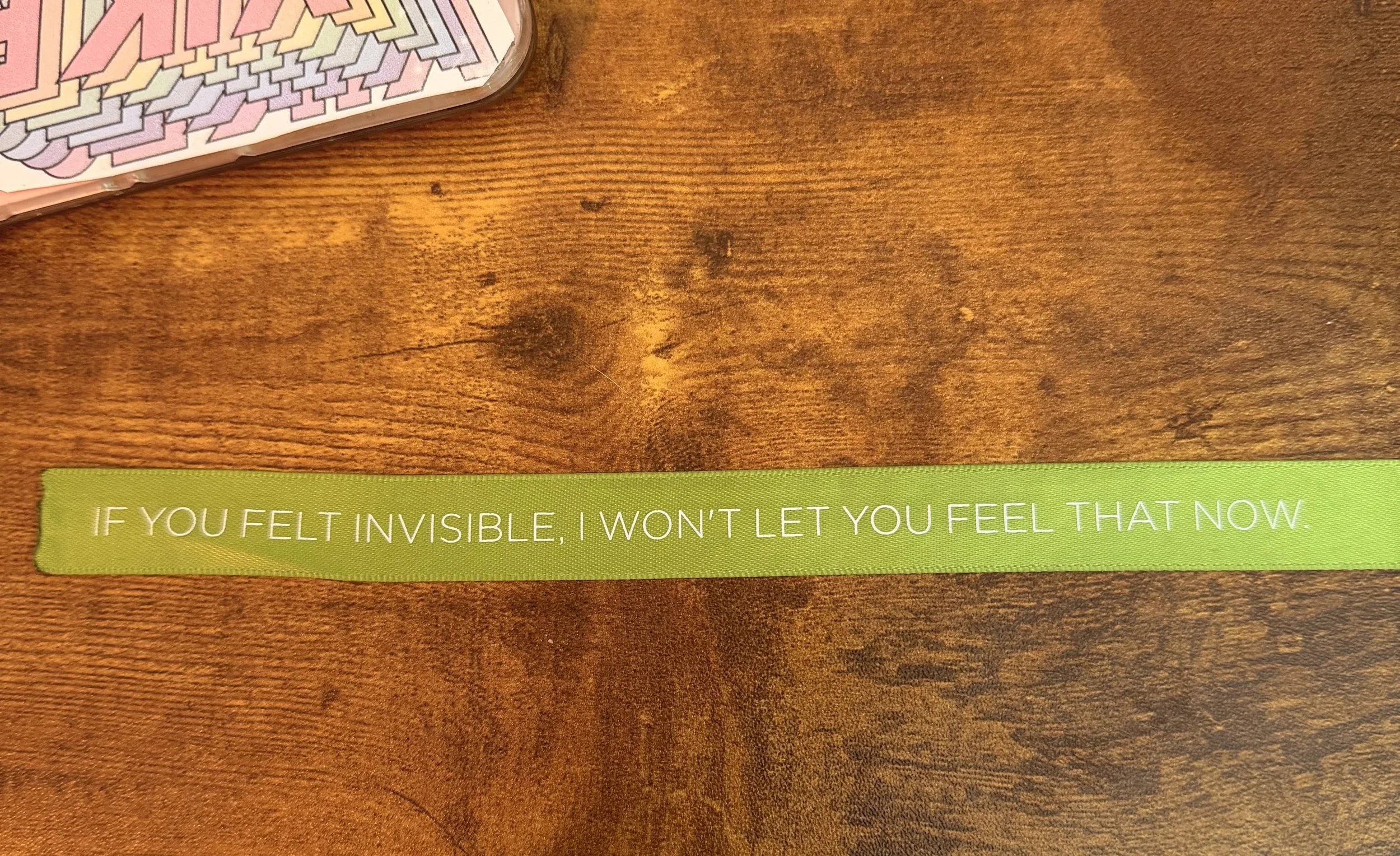
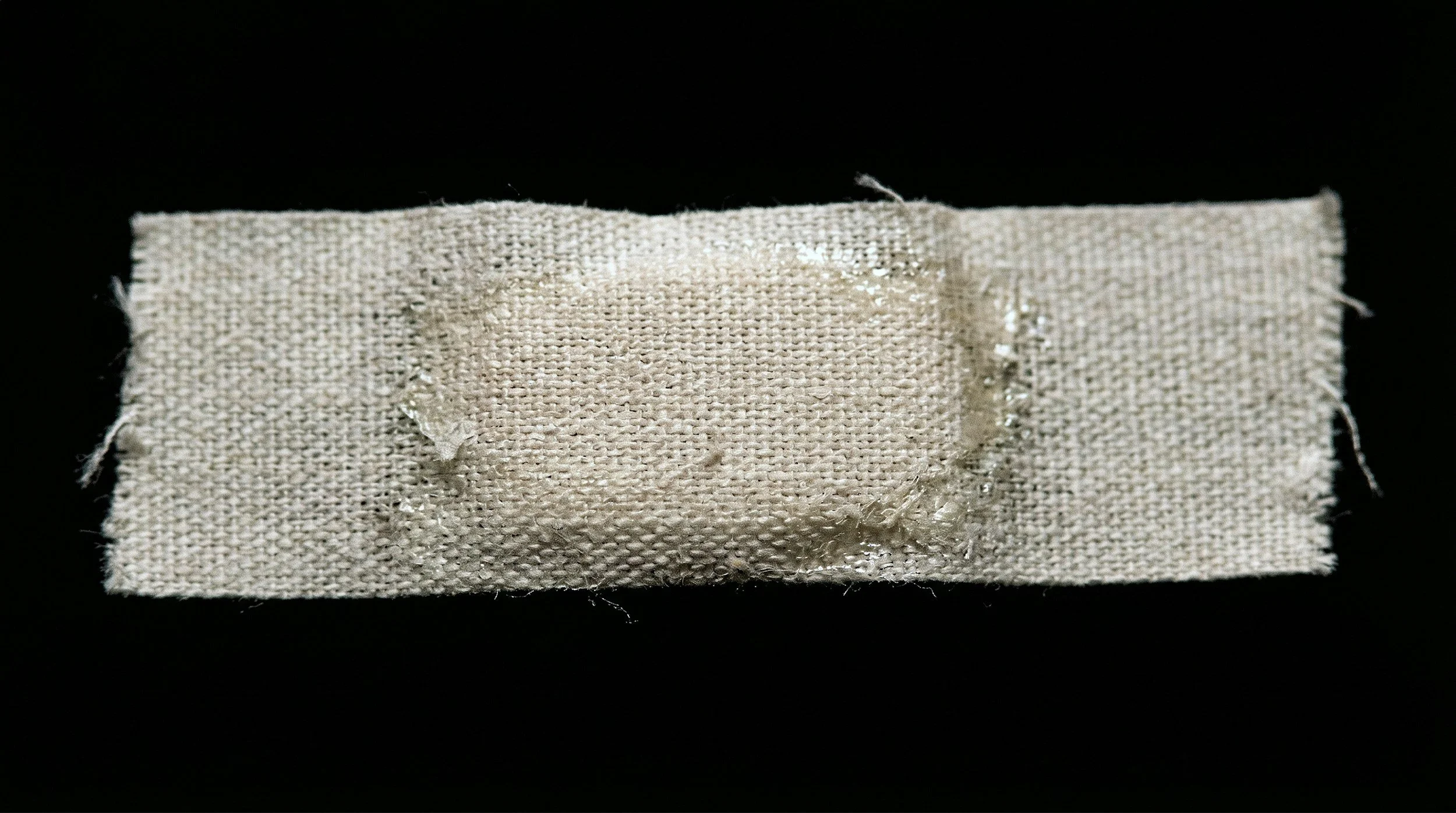
Green ribbon from the Linkin Park and Friends Concert (2017). The Ribbon reads “If you felt invisible, I won’t let you feel that now”. The ribbons were keepsakes from the Music for Relief Ribbon Wall. Fans were invited to write messages for Linkin Park in memory of Chester Bennington, lead singer. The ribbons featured inspiring lyrics honoring Chester Bennington’s memory, while raising awareness for mental health (green ribbon) and suicide prevention and supporting the event’s One More Light Fund.
“Invisible” hits that painful lie our minds tell us when we’re in despair: If I just pull away and hide my pain, I won't burden the people I love. In the context of suicidal thoughts, this distortion drives deep isolation and emotional detachment. The song illustrates how the perceived desire to protect loved ones from one's own pain can mistakenly lead to withdrawal and unexpressed grief, reassuringly reminding us:
“I was not mad at you
I was not trying to tear you down
The words that I could've used
I was too scared to say out loud...
If I cannot break your fall
I'll pick you up right off the ground
If you felt invisible
I won't let you feel that now.”
While “Invisible” was written from Mike Shinoda’s experiences as a parent, the emotional experience resonates far beyond that context: conflict, misunderstanding, and the fear that we have disappointed the people we love can make connection feel precarious. Sometimes we need the opportunity to clarify, repair, and hear directly from the people we love that conflict has not erased their care for us. We can make mistakes, disappoint one another, misunderstand one another, and still remain worthy of connection. Feeling invisible is not the same thing as actually being unseen.
Heavy
“Heavy” captures the internal exhaustion of appearing functional while existing itself feels physically and emotionally heavy. Linkin Park articulates the relentless weight of internal struggles through the image of carrying far more than one person can reasonably hold. Mental distress can remain largely invisible to others, particularly when someone has become skilled at masking, performing wellness, meeting expectations, or simply answering “I’m fine.” As evidenced by:

“I'm holding on
Why is everything so heavy?
Holding on
To so much more than I can carry
I keep dragging around what's bringing me down
If I just let go, I'd be set free.”
Sometimes suicidal ideation can emerge not necessarily from a desire for life itself to end, but from an overwhelming desire for the pain, pressure, exhaustion, or circumstances of the present moment to stop. When everything feels unbearable, the mind can begin searching desperately for an exit.
And while that heaviness can feel profoundly lonely, it is an experience shared by far more people than are comfortable disclosing it. Perhaps the answer is not always learning how to carry more. Sometimes it is asking what can be put down, what was never ours to carry in the first place, and who might be willing to hold some of it with us. We have to be willing to acknowledge the weight of existence, and the ways trauma, grief, discrimination, poverty, loneliness, burnout, illness, relationships, and countless other circumstances can affect a person’s capacity to keep carrying it, without reducing their suffering to a failure of resilience.
Sorry for Now
“Sorry for Now” speaks to the messiness of survival mode: the times when we are overwhelmed, pulling away, disappointing people we care about, and hoping there will eventually be space for understanding and repair. Acknowledging that healing and relationships are rarely linear, the song offers a perspective rooted in patience, forgiveness, and grace. There are times when someone simply does not have the capacity to show up as the version of themselves they wish they could be. Mental health crises can shrink our worlds, disrupt relationships, and leave things unsaid, not necessarily because love is absent, but because suffering has consumed so much of our available energy:
“And I'll be sorry for now that I couldn't be around
Sometimes things refuse to go the way we planned
…There will be a day that you will understand.”
The song can also take on a much heavier meaning when heard through the lens of suicidal ideation or loss: almost like a goodbye letter to people someone still deeply loves. This is an common contradiction to hold. Suicidal thoughts do not necessarily mean that someone has stopped loving the people around them. A person can care enormously about others while simultaneously experiencing suffering so intense that they struggle to imagine another way for it to end. Too often, suicide is discussed through accusations of selfishness or through questions like “How could they do this to the people who loved them?” But shame rarely creates the conditions for someone to disclose thoughts they are already terrified or ashamed to admit.
In fact, telling someone that they have to stay alive because of what their death would do to others can unintentionally add another burden: Now I am suffering, and I am hurting everyone simply by suffering. Connection built primarily around guilt is different from connection built around genuine care. Perhaps what someone needs to hear is not, “Think about what this would do to us,” but rather: You do not have to earn your place here. You are allowed to be struggling. You are allowed to need help. We can be scared with you without punishing you for being scared.
One More Light
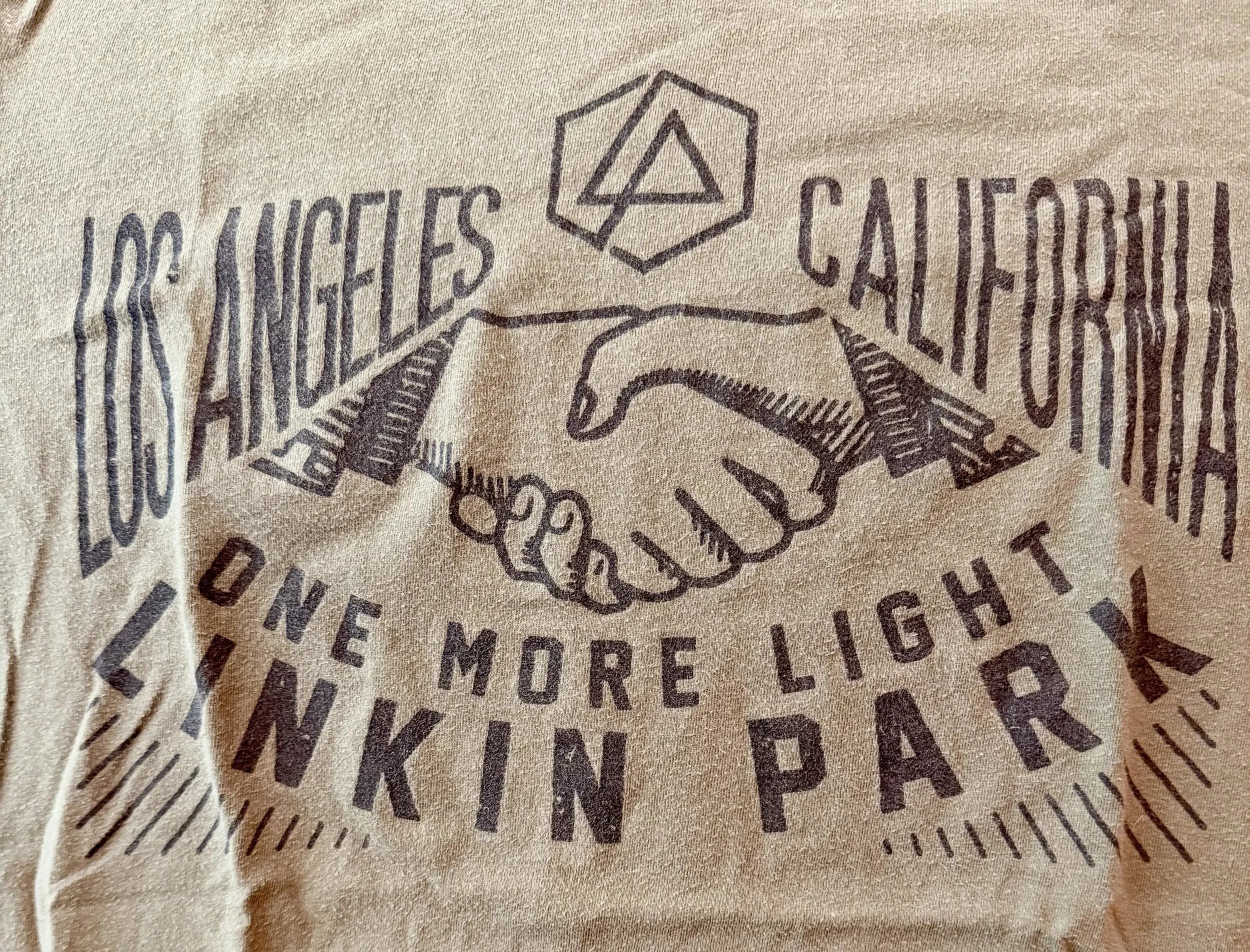
My shirt from the Linkin Park and Friends Concert (2017) at the Hollywood Bowl. The green shirt reads “Los Angeles California, One More Light, Linkin Park”.
And then, of course, “One More Light,” a track that sits beside you in the dark rather than demanding that you immediately find your way out of it. While the song was originally written in response to a bandmate’s friend’s battle with cancer, it has resonated deeply with people navigating tremendous loss, including loss to suicide. There is something profoundly accepting in the song’s willingness to acknowledge just how painful and exhausting being alive can sometimes feel, without judgment or shame. At the same time, it gently challenges the belief that our absence would go unnoticed.
“Who cares if one more light goes out?
In the sky of a million stars
It flickers, flickers
Who cares when someone's time runs out?
If a moment is all we are”
Genuine care is not always perfectly expressed. Sometimes it lives in the people who remember something small about you, send you something because it made them think of you, check in, make space for you, laugh with you, sit beside you, or simply want you here. And sometimes depression, trauma, shame, or suicidal despair makes that care incredibly difficult to perceive. The inability to feel connected in a particular moment does not necessarily mean connection has disappeared.
Perhaps “One More Light” can therefore serve as a reminder to reconnect with the people who help us remember this, to reach toward those who make us feel accepted rather than merely tolerated, cared for rather than managed, and valued not for what we accomplish, produce, or provide, but simply because we are here. And when someone is lost, the grief that follows reminds us that no light exists in isolation. We are connected to one another in ways that can become extraordinarily difficult to see from inside our darkest moments.
Sharp Edges
“Sharp Edges” acknowledges something equally important: sometimes life really does hurt. We cannot respond to suffering simply by telling people to be more resilient or “be careful” without acknowledging the environments they are being asked to survive. Trauma, rejection, discrimination, systemic oppression, burnout, and chronic invalidation can leave wounds—some visible, many not. The song’s imagery of scars carrying stories offers another way of understanding those wounds: not as evidence of weakness or something shameful to hide, but as reminders that something hurt and that we coped with it however we knew how.
“Sharp edges have consequences
I guess that I had to find out for myself
…Every scar is a story I can tell.”
Acceptance does not require romanticizing suffering, finding a lesson in every wound, or pretending that what happened was okay. Some things should not have happened; some people and systems really do fail us. But a scar is not the entirety of someone’s story, there are chapters before it and chapters still unwritten. Perhaps healing means approaching our sharp edges with curiosity rather than shame: What happened to me? What did I need then? What do I need now? We can acknowledge what happened, the hurt, and know you survived it in the ways you knew how.
Final Thoughts
Every time Suicide Awareness Month rolls around, I catch myself feeling something is amiss by the standard advice. "Just reach out for help," the graphics say. But that puts the entire burden back on the person who is already exhausted.
To me, true suicide awareness isn't about platitudes. It’s about harm reduction, creating a space where someone can say, "I'm having thoughts of not wanting to be here," without us panicking, judging, or taking away their agency. It’s about recognizing that suicidal despair isn't just an individual failure or a "chemical imbalance", it’s deeply affected by systemic oppression, isolation, and a world that pushes people past their breaking points.
I didn't enter this field to "fix" anyone or pretend I have all the answers. I became a therapist because of nights like that one in 2017. I wanted to build a practice where people could show up with all their sharp edges, drop the mask of having it together, and hear a simple, honest answer to Linkin Park’s question:
Who Cares if One More Light Goes Out?
Well, I do.
If you’re carrying a weight today that no one else can see, I see you. You don't have to carry it all by yourself.
Looking for ongoing, affirming support?
Help Send Therapy provides online therapy for LGBTQIA+, BIPOC, neurodivergent, and other wonderfully complex people throughout California.
Reference
Linkin Park. (2017). One more light [Album]. Warner Bros. Records; Machine Shop Recordings.